Understanding Generalised Anxiety Disorder (GAD)
What is GAD?
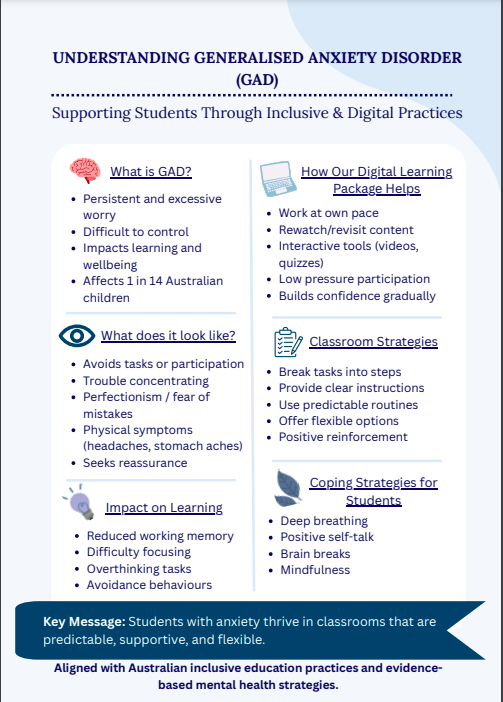
Generalised Anxiety Disorder (GAD) is a mental health condition characterised by excessive and persistent worry that is difficult to control. This worry can interfere with a student’s ability to concentrate, participate, and feel confident in the classroom.
GAD is one of the most common mental health conditions affecting children and adolescents in Australia, meaning teachers are likely to support students experiencing anxiety in mainstream classrooms.
What does GAD look like in the classroom?
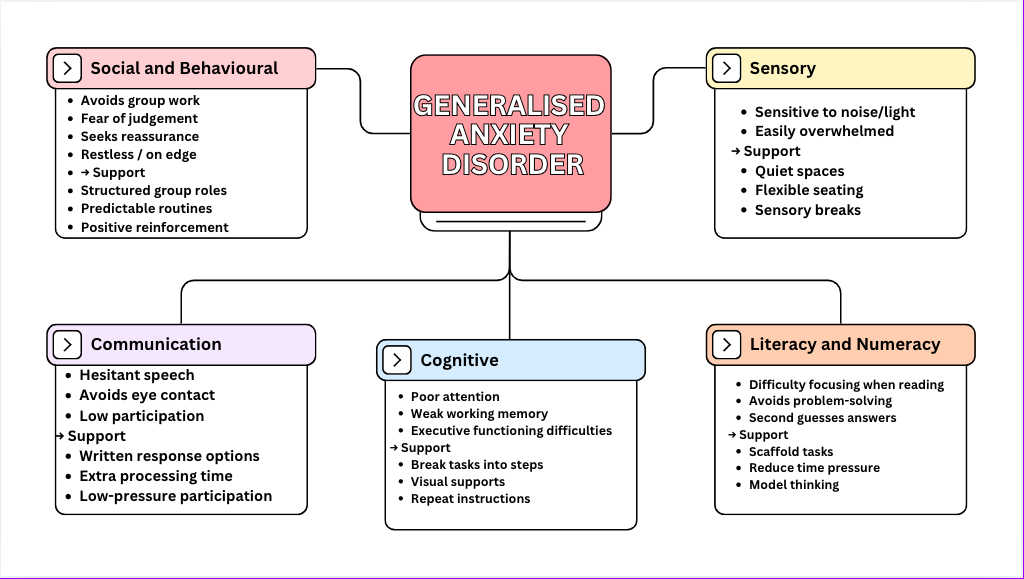
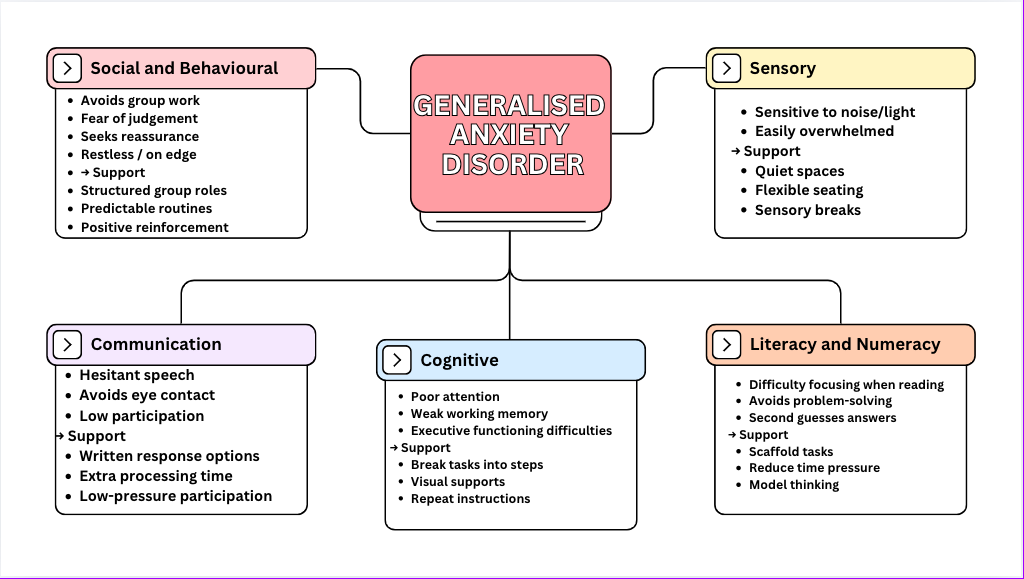
Students with GAD may display a range of behaviours that impact their learning and participation. These may include:
Avoiding tasks or classroom participation
Trouble concentrating or staying on task
Perfectionism or fear of making mistakes
Frequently seeking reassurance from teachers
Appearing restless, tense, or “on edge”
Experiencing physical symptoms such as headaches or stomach aches
How does GAD impact learning?
Anxiety can significantly affect a student’s ability to learn. When a student is feeling anxious, their brain is focused on perceived threats rather than processing new information.
This may result in:
Reduced attention and focus
Difficulty retaining information (working memory)
Overthinking tasks or instructions
Avoidance of challenging work
Reduced participation in class discussions
Why this matters for teachers
Understanding GAD is essential for teachers, as anxiety can impact both academic performance and student wellbeing. Without appropriate support, students may disengage from learning, avoid participation, or experience ongoing stress in the classroom.
By recognising the signs of anxiety early, teachers can implement supportive strategies that reduce stress, build confidence, and improve learning outcomes.
A strength-based perspective
It is important to recognise that students with anxiety also bring strengths to the classroom. Many students with GAD are thoughtful, empathetic, and motivated to succeed.
With the right support, these students can thrive in structured, supportive, and inclusive learning environments.